IAC Journeys: Exploring the World with Students and their Families
International Academic Competitions’ travel program, IAC Journeys, is delighted to announce its Summer 2026 tours in conjunction with the 2026 International Geography Championships! These include a Pre-Tour to Bangkok and a Post-Tour to Angkor Wat & Cambodia, both of which will last for four nights and three full days. The Bangkok tour also has an optional tour on the fourth day (departure day). Please review the itinerary and description of the Angkor Wat & Cambodia Post-Tour below, as well as the information on the Costs, Details, Practicalities. Registration runs through June 1, though space is limited, and significant registration discounts are available if payment is made by December 29. For questions about the tours, please contact IAC Executive Director and Tour Leader, David Madden, directly at david@iacompetitions.com.
Post-Trip to Angkor Wat & Cambodia: Tour Plan
July 12
IGC concludes on the evening of the 11th, so families are free to fly to Siem Reap, Cambodia, the gateway city for Angkor Wat, at any point on July 12. However, we recommend a late morning or early afternoon departure (from 10am-3pm) so that you can both enjoy breakfast at the hotel in Khao Lak, and still arrive early enough in the evening to reach Siem Reap in time for dinner. Flights from Phuket to Siem Reap almost always require a stopover, most typically in Bangkok, though Singapore or Kuala Lumpur are possible transfer airports as well. We recommend using www.kayak.com to find the best option.
Upon arrival in Siem Reap, for the most popular flights, we will arrange airport transfers (there is an extra surcharge of $10 USD per person each way for this service) by bus to the Courtyard by Marriott Siem Reap Resort. If you are arriving on a different flight, we will provide you with instructions on how to take a taxi or a Grab (i.e. rideshare; basically the equivalent of Uber in Southeast Asia) to the hotel we stay at for the following four nights: the Courtyard by Marriott Siem Reap Resort. Note that this is a 4-star hotel that is equivalent in comfort and quality to a standard full-service Marriott in North America or Europe (Courtyard is interestingly an upmarket brand in Asia); you can read a very positive review of the hotel here.
At 8pm at the hotel, we will have an optional briefing with our guides that will give a brief introduction to Khmer and Cambodian culture, along with some tips for how best to enjoy the following three days in Siem Reap, Angkor Wat, and the surrounding area.
July 13-15
Our tour will consist of three days. If there are 75-100 people or fewer on the tour, then we will likely stay together as one group, and everyone will see the sites in the order that they are presented here (i.e. starting with Angkor Wat on the morning of July 13 as shown in the “Day A” itinerary). If our group is larger than that, we may split up such that a portion of the group begins on July 13 with the “Day B” itinerary as presented below, then touring the Day C itinerary on July 14, and the Day A itinerary on July 15. In any case, all participants will see the same sites, it is simply the order that may change due to the need to not have too many people in one spot at once. Participants will be on buses that seat 25 people throughout; all family members (and any accompanying friends) will be on the same bus. On the registration form, you can request to be placed on a bus with specific students or families with whom you are friends. We will honor these requests as best as we can.
Throughout the tour, professional tour guides will accompany us and give us an informed, local perspective on Khmer and Cambodian culture, geography, and history. IAC will provide supplemental guides from its IGC Staff who will assist with the group and take the lead in organizing the optional Bee competitions in the late afternoon.
Day A (likely July 13)
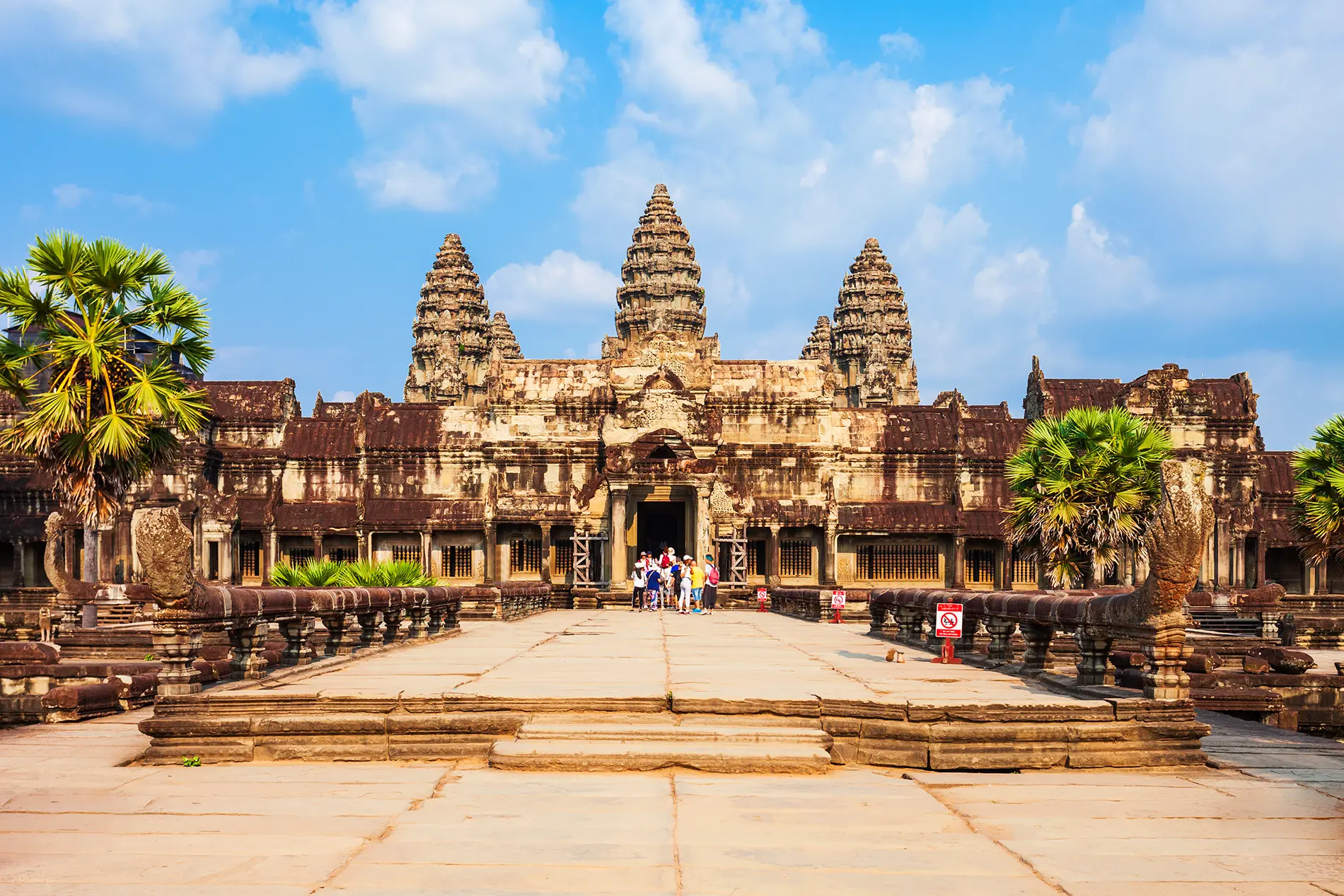
On this day, we will begin with the centerpiece of the region, and indeed, one of the most iconic sites of the whole world: Angkor Wat. Built as a Hindu temple complex in the 12th century, Angkor Wat was also used as a Buddhist temple from early in its history. It is the best-known example of Khmer architecture, and is a national symbol of Cambodia. Families will have the option to tour Angkor Wat at sunrise, when it is at its most beautiful (and comfortable, given the tropical heat), with a departure from the hotel around 5:15, or depart two hours later after breakfast. If you opt to go on the sunrise visit, the hotel will prepare coffee and a light packed breakfast, and then you’ll be able to come back to the hotel around 8am for the full buffet.
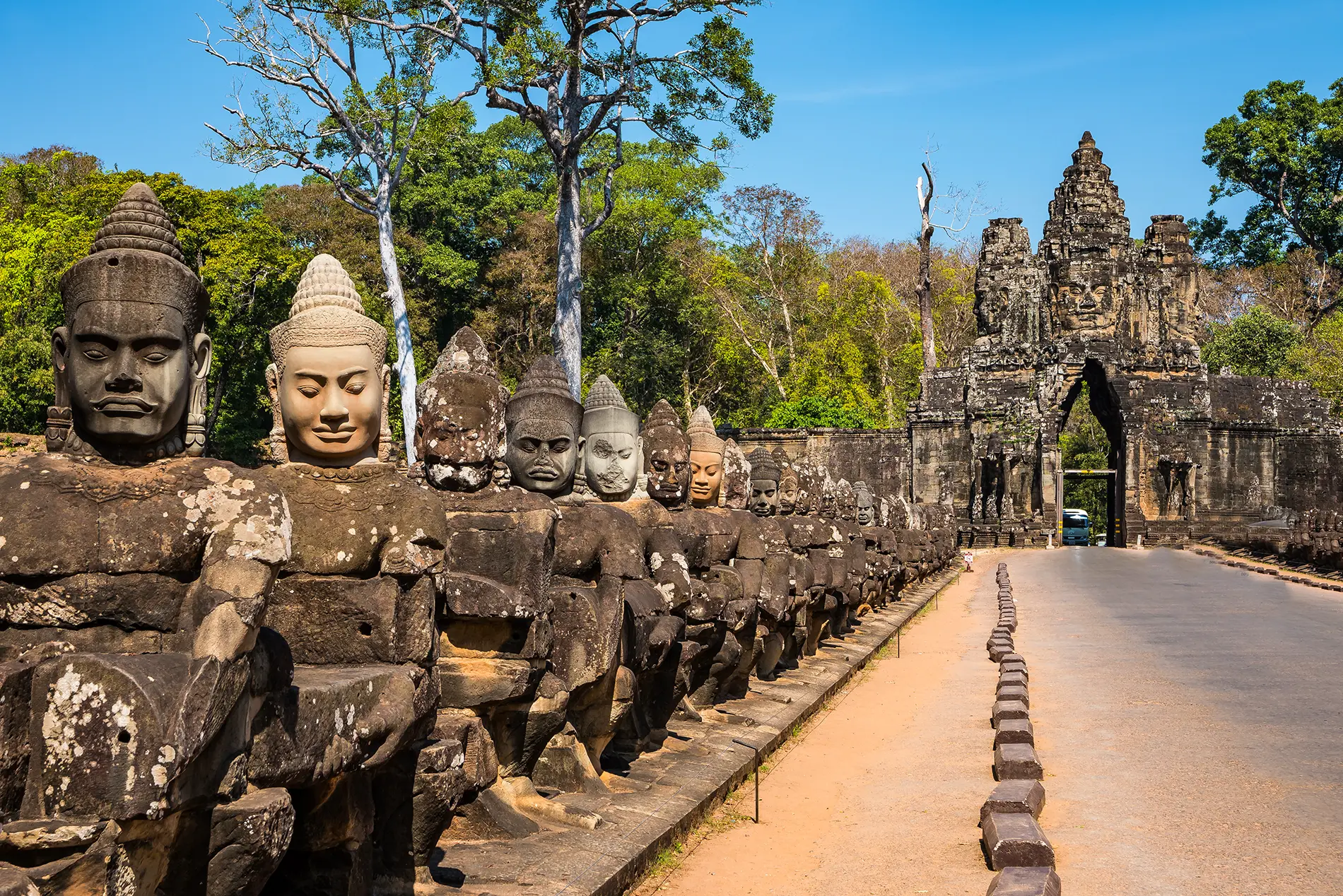
Angkor Wat also lies next to the ruins of Angkor Thom, which was the capital of the Khmer Empire and home to over 100,000 people at its height in the 13th century. Angkor Thom itself is home to beautiful temples as well, most notably the Bayon complex, built by Jayavarman VII, the most powerful Khmer monarch. Other sites we’ll see at Angkor Thom include the meticulously restored Baphuon “Temple-Mountain” and the adjacent Terrace of the Elephants. After lunch at a nearby restaurant, we’ll continue on to see the incredible Ta Prohm temple and Buddhist monastery complex, which has largely been overgrown by the surrounding jungle. This beautiful interplay of ruins and nature was famously featured in the movie, Lara Croft: Tomb Raider.
By now, we’ll be ready for a change of pace, so you have the option to either head back to the hotel to relax, explore Siem Reap at your leisure, or if you’re up for something totally different, and yet still aligned with the theme of the day, you can come with us to Angkor Wat Putt, a 14 hole miniature golf course featuring models of the Angkor temples throughout the layout. In the late afternoon, participants (including adults, who will compete in their own division) have the chance to then test their newly-acquired knowledge in the Southeast Asian History Bee. Finally, we’ll head back into town where you can have dinner at local restaurants or at the Night Markets, where a mango sticky rice dessert can be a sweet way to end the day.
Day B (likely July 14)
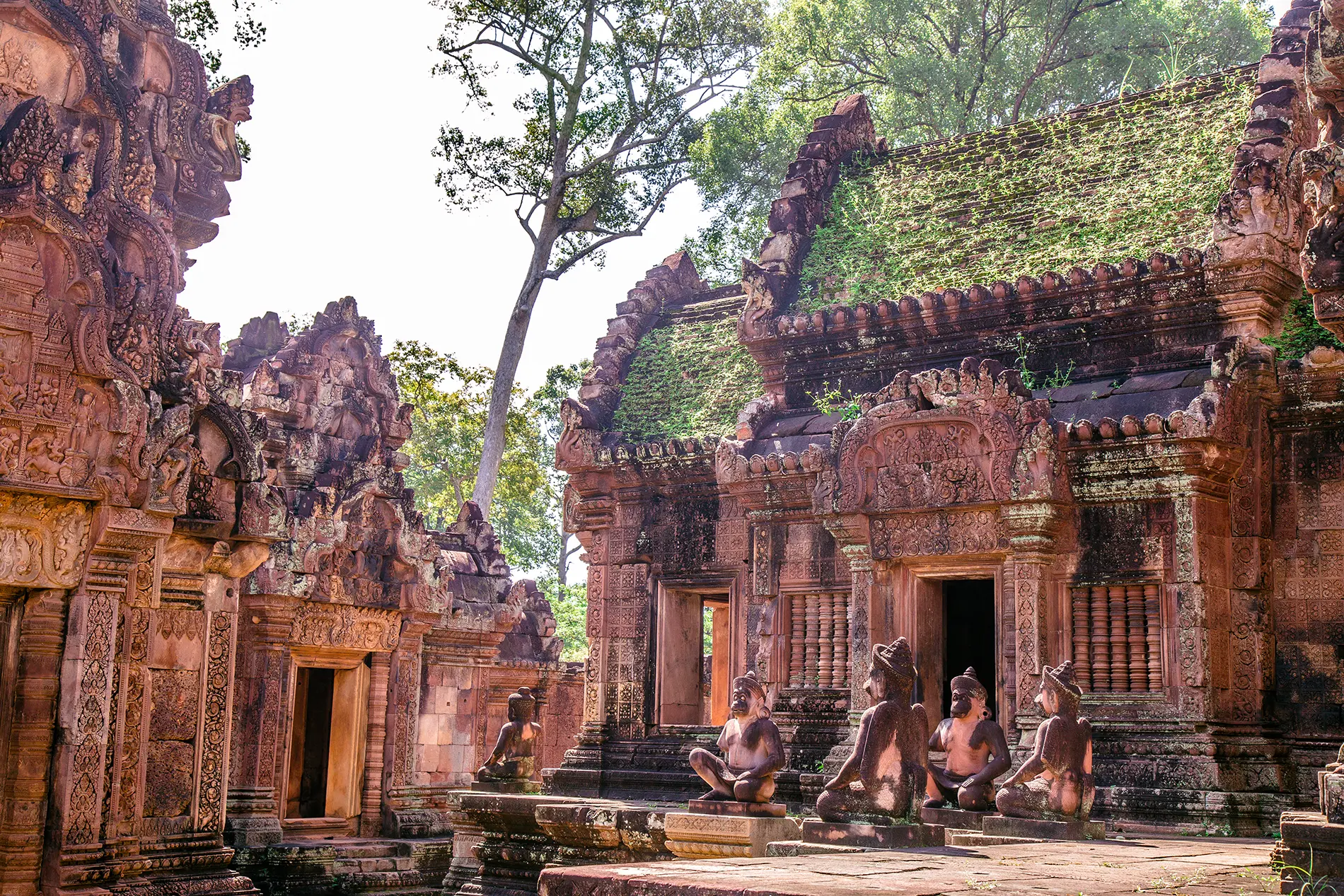
On this day, we’ll continue visiting the temples of the region by starting with a visit to the Preah Khan Temple. This beautiful complex nearly 140 acres large consists of temples, towers, shrines, passageways, and is best explored early in the day. Our visit will include a stop to see the Neak Pean temple set in a man-made reservoir, or baray, and depicting two intertwined serpents. Next, we’ll head to the Eastern Mebon temple, a Hindu site that features some of the best surviving temple carvings before our morning sightseeing culminates at the Banteay Srei Temple as shown in this video. Known as the “Citadel of Women,” and dedicated to the Hindu deities Shiva and Parvati, Banteay Srei is one of the earliest surviving temples in the region, dating to the 10th century. It is built out of red sandstone, which allowed for numerous intricate carvings that are remarkably well preserved.
We’ll then head back to Siem Reap for lunch at Spoons, a social enterprise that offers well-paying jobs and training to local young people while promoting traditional Cambodian cuisine and handicrafts. After lunch, we’ll shift focus to Cambodia’s turbulent 20th century history with two optional visits that explore the aftermath of the Khmer Rouge regime in the 1970’s (when 20-25% of the Cambodian population was murdered by its own government). Cambodia’s troubles from that era include widespread lingering land mines, but at the Apopo Visitor Center, we’ll learn how they are being cleared by a surprising creature: African Giant Pouched Rats. Known as Hero Rats (per the Apopo website “they’re much cuter than they sound… kids love meeting the rats!”), they have proven very effective in demining efforts. Apopo is at the forefront of this effort, which also involves dogs they train as well. Near Apopo, we’ll also have the option of visiting the Wat Thmey Pagoda, which was one of numerous sites throughout Cambodia that are known as “killing fields.” Today, Wat Thmey functions as a temple, a museum, and a memorial to those killed on its grounds, who numbered among the 2 million victims of the Khmer Rouge. If you wish to explore Siem Reap on your own instead of visiting either or both of these sites, you are welcome to do so.
In the late afternoon back at the hotel, we’ll continue with our Academic Bee which features quiz questions from all academic subjects. During this friendly competition, IAC staff will also give some basic tips and instructions for improving on the buzzer to both students and interested adults alike. Finally, dinner tonight (which is included in the cost of the tour) will take place at a show featuring a traditional Apsara-style dance performance, which dates back to the years of the Khmer Empire, and which can be seen on many of the carvings at Angkor Wat and other temples throughout the region.

Day C (likely July 15)
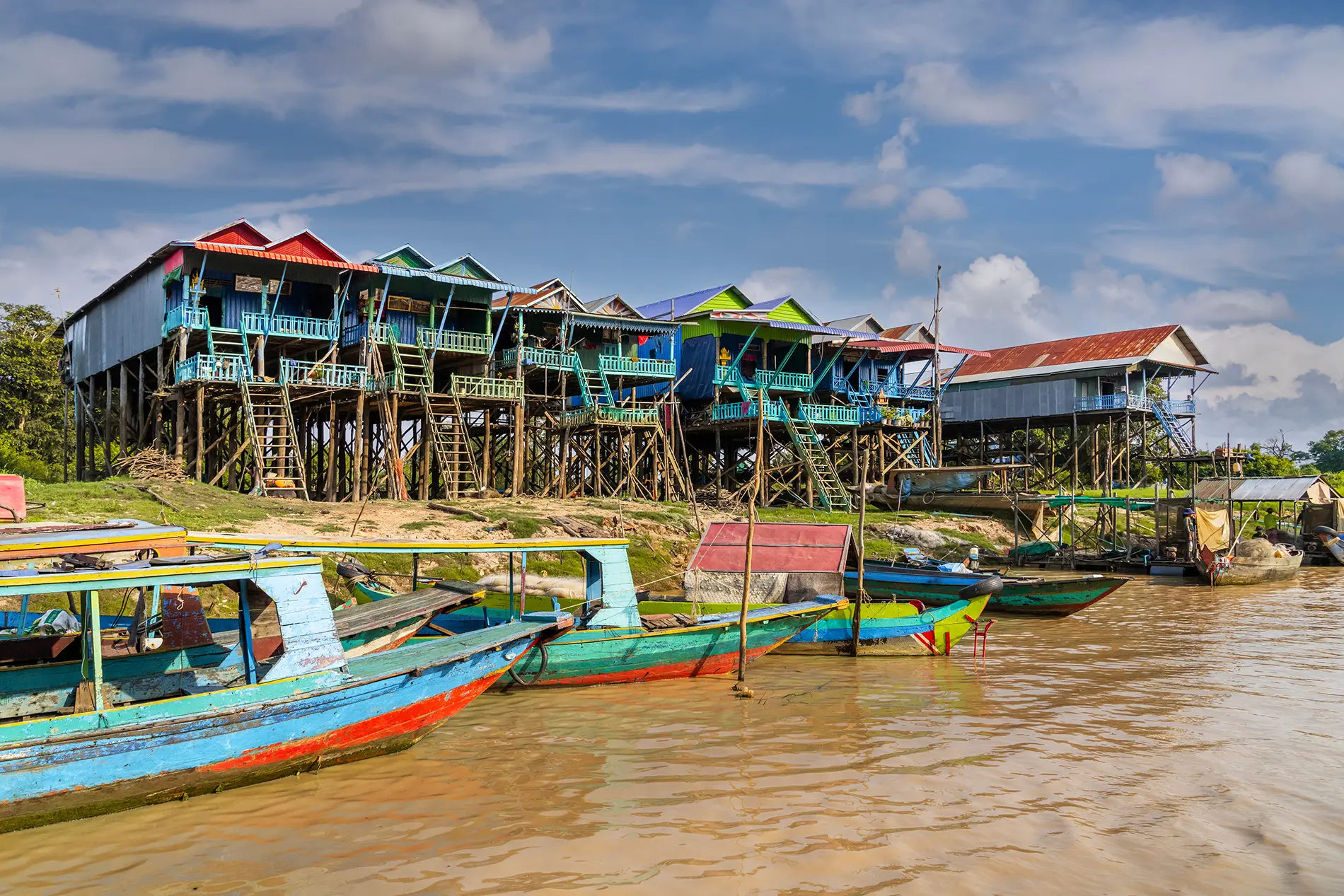
Today, we’ll venture slightly farther afield to one of the great natural wonders of Southeast Asia: the highly seasonal Tonle Sap lake. Part of the Lower Mekong River watershed, the Tonle Sap was designated a UNESCO Biosphere Reserve in 1997, though the health of its ecosystem is threatened by dams and other development. Our visit will coincide with relatively high water levels (with the water generally flowing away from the Mekong Delta) which will give us a great opportunity to take a boat trip to its “floating villages.” Used by fishing communities, these collections of houses and buildings on stilts appear to float on the water. For those who wish to explore the biodiversity of the region in greater detail, an optional Sunrise Birding and Nature Tour with a local wildlife guide will leave the hotel at 5:30 and focus on the Phnom Krom Marshes, home to numerous herons, kingfishers, storks, ducks, and other water and land birds; an additional $20 surcharge applies per person. The Birding and Nature Tour participants will receive a packed breakfast with drinks (including coffee) at the hotel before setting out, and will meet the rest of the group prior to the boat tour.
After lunch at a restaurant featuring local fish and other cuisine, we’ll head back to the Angkor National Museum where the full scope of Khmer history is on display, including many statues that originally were found at area temples. We’ll then head back for some free time in Siem Reap before our last Bee competition – and one last Geography Bee at that. After dinner, the tour will conclude at Phare: the Cambodian Circus, which features local performers in a celebration of Cambodian culture.
July 16
Families may depart from Siem Reap at any point today. We will likely organize one or more bus transfers to the airport at $10 per person coinciding with the most popular departure times. Otherwise, taxis or Grab cars can bring you to the airport in 45-60 minutes; we recommend arriving 2 hours prior to your flight. We can also provide recommendations for further travel in Cambodia, or elsewhere in Southeast Asia, upon request.
Past IAC Journeys Itineraries & Reports
2026 marks the third summer that IAC Journeys is offering family travel opportunities together with our international championship events. Please see below for further details on tours we’ve run in the past.